The question of who runs an AI system after launch is at the heart of whether your investment will actually deliver value or simply become another failed technology experiment. In practice, operating production-grade AI is a continuous discipline—not a handoff or a checkbox at go-live. For mid-market, enterprise, and regulated organizations, this is about accountable ownership: monitoring the system, updating models, securing data, and ensuring every organizational and compliance risk is managed, day in and day out.
After launch, the responsibility for running an AI system falls into the hands of a dedicated operational team, internal or external, that takes charge of ongoing management, monitoring, tuning, and risk mitigation. SkyView Labs stands out by structuring engagements so that the same senior engineers who build and deploy your AI system also operate it after launch, backed by production operations from Spectrum Virtual—an IT services team with more than a decade of experience running mission-critical systems.
Definition: Managed AI Operations
Managed AI operations refers to the ongoing set of responsibilities required to maintain, monitor, secure, update, and improve production AI systems after deployment. This is fundamentally different from project-based consulting, as it covers daily operations, addresses incidents, manages infrastructure, handles model updates, and ensures compliance—delivering reliability and risk control at scale.

Why Post-Launch Operations Determine AI Success
For many organizations, the difference between AI projects that persist and those that fail is operational ownership. Without ongoing monitoring, model tuning, integration maintenance, and a clear escalation path for incidents, even top-tier AI rapidly decays in accuracy and value. Many buyers learn this lesson when the team that built the system departs, leaving knowledge gaps and unclear responsibility for updates, cost management, or compliance response.
Organizations with strong managed AI operations see:
- Proactive incident detection and resolution
- Continuous improvement as workflows evolve
- Predictable and transparent costs
- Confidence during audits or security reviews
- Sustained business value, not just a demo
Step-by-Step: What Managed AI Operations Covers
At SkyView Labs, managed AI operations spans the complete lifecycle and stack, addressing five critical domains:
- Monitoring and Observability
24/7 automated monitoring covers application, model, infrastructure, and security metrics across all environments—whether running in SkyView’s private AI cloud, your cloud, or on-prem. - Incident Response and SLAs
Incidents are triaged and resolved by a team that knows your environment. Response time SLAs (S1 in minutes, S2 in hours, S3 by next business day) are backed by Spectrum Virtual’s network operations center (NOC). - Model Lifecycle Management
Models are versioned, monitored for drift, retrained or updated based on real data, and rolled out using staged deployments and documented rollback strategies. - Infrastructure, Security, and Compliance
Operations include management of servers, containers, data isolation, encryption, access controls, and maintaining all compliance artifacts—vital for regulated sectors. - Cost Optimization and Reporting
Resource usage is tracked and optimized—whether per-token (for public APIs) or per-GPU (for private deployments). Reports are provided to ensure business stakeholders know where value and cost intersect.
Who Actually Runs Your AI System: Ownership Models
There are four primary operations models for post-launch AI, with distinct tradeoffs:
- Internal Operations—Your IT or data teams assume direct responsibility. Suitable if you have established MLOps or LLMOps capabilities and the staff bandwidth.
- Third-Party Operations Provider—Build and operations are split between different vendors. Efficient but sometimes silos vital integration knowledge.
- Unified Build-and-Run Team—One partner owns architecture, build, deployment, and ongoing operations. This is SkyView Labs’ model, which accelerates incident response, ensures deep system knowledge, and eliminates handoff gaps.
- Hybrid with Gradual Handover—Begin with external managed ops, then transition responsibility in phases to your internal team as capability matures.
Concrete Example: Managed AI Operations in Practice
For illustration, consider our specialty retail client—a large animation art gallery. The platform was fully modernized, AI-native discovery shipped, and integrated with legacy POS and online commerce, transforming both revenue and operations. Post-launch, SkyView Labs continued to operate the system under a managed services agreement—covering hosting in a private AI cloud, monitoring, updates, triage, and compliance, enabling the client to focus on business outcomes rather than technology firefighting. Read more in our case study.
The SkyView Labs Approach: End-to-End Accountability
SkyView Labs was purpose-built to fill the critical gap left by consulting firms who walk away after deployment. Our managed AI operations are engineered for organizations that expect real accountability, resilience, and adaptation as business needs evolve.
- The same senior engineers who scoped and built your system remain your day-to-day operators.
- Every engagement is backed by a legal and operational entity (Spectrum Virtual) that has run production infrastructure since 2013.
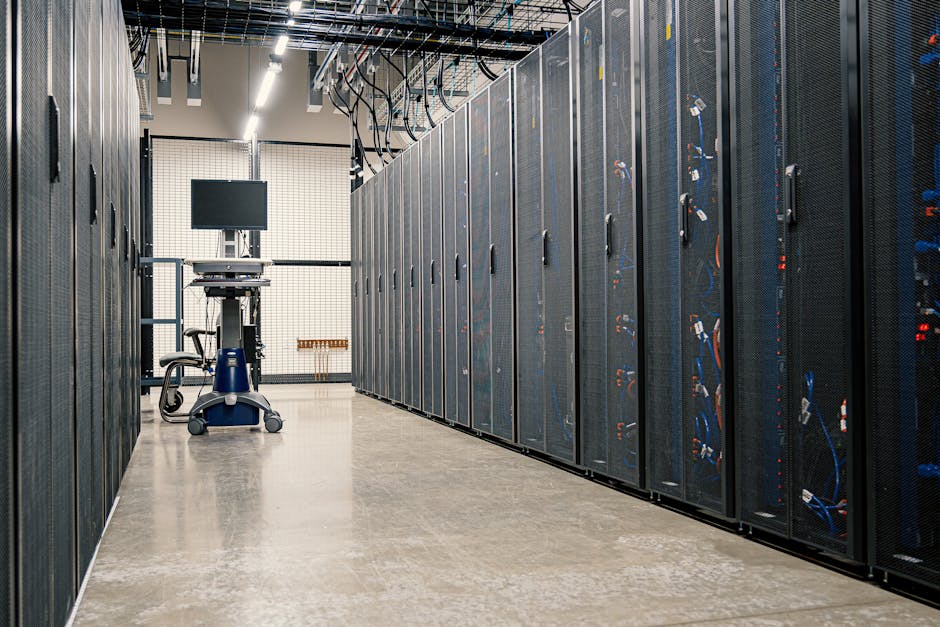
- Infrastructure is housed in attested Tier III data centers in Marlborough, MA, and Chicago, IL, plus a dedicated on-prem server room in CT.
- All systems include documented compliance (SOC 2, HIPAA, ISO 27001, PCI DSS) and data flow artifacts, ready for procurement review.
- We offer clear transition paths if you later decide to bring operations in-house—runbooks, access, and documentation are all available by design.
Best Practices for Buyers: How To Choose and Structure Managed AI Operations
- Demand senior, named operational owners—not just a support email.
- Insist on transparent handover plans, runbooks, and documentation.
- Ask about monitoring, escalation, and recovery SLAs—in plain terms.
- Request a walk-through of actual production systems and learnings.
- Separate costs for build, operations, and infrastructure in contracts.
- Review past work—especially how ongoing operations sustained value.
- Map your own team’s operating skill gaps before defaulting to internalization.
For a deeper dive on real-world challenges and planning for ongoing operations, see our analysis of why most AI projects fail without strong data foundations and our practical checklist for legacy modernization.
FAQs: Managed AI Operations After Launch
What is included in SkyView Labs' managed AI operations?
Comprehensive coverage: hosting, monitoring, incident response, model and dependency updates, cost optimization, security, and ongoing engineering support, all provided by the original build team and Spectrum Virtual’s operations division. For details see Managed AI Operations.
How does SkyView Labs ensure compliance for regulated industries?
Workloads for healthcare, finance, government, or legal use our attested private AI cloud or on-prem hosting, never public APIs for sensitive data, with documented data flows and support for BAAs, DPAs, and formal compliance reviews. See AI for Regulated Industries.
Can SkyView Labs take over AI systems built by other vendors?
Yes. We offer a formal Assessment and Handover service to onboard existing (or orphaned) AI systems into our managed operations platform, documenting architectures and migrating monitoring, access, and runbooks.
Is it possible to transition from managed operations to in-house?
Absolutely. Every SkyView system is documented for handover, enabling your team to assume operations in phases as you staff up internal capability.
What is the difference between internal IT operations and managed AI operations?
Traditional IT teams often lack the domain expertise to maintain, monitor, and improve modern AI models, vector databases, and orchestration layers. Managed AI operations bring specialized MLOps, drift detection, cost optimization, and governance as a continuous, accountable service.
Where are SkyView Labs' operations teams and infrastructure based?
Operations are provided by Spectrum Virtual’s team based in Connecticut, with infrastructure in TierPoint Marlborough (MA), Chicago (IL), and our CT headquarters. No offshoring or junior team handoffs—senior practitioners lead every engagement.
How are business outcomes and ROI tracked after launch?
Each engagement begins by benchmarking manual hours, redundant processes, and target outcomes. Ongoing KPIs and operational metrics are reported—typically covering reclaimed time, error rates, and capacity improvements.
What deployment models are supported?
We offer on-prem, public cloud (in your tenant), SkyView private AI cloud, or a hybrid of these depending on data sensitivity, compliance requirements, and procurement constraints. Every option ensures contract-defined data flows, monitoring, and isolation.
What happens if SkyView Labs ever exits the market?
SkyView Labs operates as a DBA of Spectrum Virtual, an established IT services company since 2013. The infrastructure, contracts, and operational staff remain in place to ensure business continuity.
Conclusion
Who runs your AI system after launch is one of the single most important decisions for any organization adopting AI at a meaningful scale. Effective managed AI operations demand specialized skills, mature processes, and a team ready to handle every aspect of production risk, compliance, and continuous improvement. At SkyView Labs, we combine senior engineering, proven infrastructure, and a commitment to end-to-end accountability so you can focus on results—not firefighting.
If you’re ready to move beyond pilots and want to ensure your AI keeps delivering, consider starting with an AI Modernization Assessment or contact us to discuss how managed operations could work for you.