After an artificial intelligence (AI) system goes live, ongoing monitoring becomes the most critical factor in determining whether it delivers long-term value, remains safe, and continues to meet business objectives. Monitoring is not a one-off checklist, but a continuous, multi-dimensional discipline—one that requires integrating observability, quality assurance, security vigilance, and business impact measurement. Teams that treat post-launch AI like software in active production succeed where others fail.
At SkyView Labs, every AI deployment is built on the principle that production readiness is not a finish line. Our approach—shaped by years of experience running enterprise AI and workflow automation in regulated and mission-critical environments—emphasizes monitoring infrastructure, model behavior, data pipelines, and outcomes in a unified, transparent framework. The following guide details exactly what you need to monitor after go-live, why it matters, and how to operationalize best practices.
Definition: Post-Launch AI Monitoring
Post-launch AI monitoring refers to the set of technical, operational, and business processes used to track system integrity, model performance, data fidelity, security posture, and outcome delivery after an AI tool or workflow is put into real-world use. It is the mechanism that ensures AI systems remain effective, safe, and aligned with both user needs and organizational goals as conditions change.
Six Core Pillars to Monitor
Effective monitoring spans six essential domains. Each domain addresses a common source of post-launch failures, and together, they form the backbone of robust AI operations:
- System Integrity (uptime, latency, error rates, workflow failures)
- Model Output Quality (accuracy, groundedness, hallucination rate, completion)
- Data Health and Drift (data pipeline errors, schema drift, input changes)
- Security and Safety (prompt injection, PII leakage, access anomalies)
- Cost and Efficiency (token usage, GPU utilization, economic ROI)
- Business Impact (adoption, completion rate, hours saved, outcome KPIs)

1. System Integrity
Is the AI system running and responding as expected? Monitoring should start with fundamental health indicators:
- Uptime and Outages: Service availability, scheduled/unplanned downtime, and recovery times.
- Latency: Response times at multiple percentiles (e.g., p50/p90/p99 for chat and batch APIs), including time to first token for LLMs.
- Error Rates: Frequency and distribution of API errors, inference timeouts, retries, malformed outputs, and pipeline failures.
- Retrieval Failures: Empty retrieval contexts or missing data flows in retrieval-augmented generation (RAG) and traditional ETL/ML models.
- Throughput: Request volume, concurrency, queue depth, and bottlenecks during peak use.
In practice, SkyView Labs integrates infrastructure and application monitoring so that anomalies in connectors or workflow layers are caught before they escalate to user-visible failures. For more on the challenge of keeping all systems talking, see How to Preserve Data Lineage When AI Makes Decisions Across Systems.
2. Model Output Quality
Does the AI deliver accurate, relevant, and policy-compliant results? Quality signals to monitor include:
- Accuracy: Correctness of output compared to ground truth or downstream validation.
- Relevance: Whether answers or actions are contextually appropriate and aligned with the user request.
- Hallucination Rate: Frequency of unsupported or fabricated responses, a critical dimension for LLMs.
- Groundedness: Traceability of answers to authoritative data sources, especially in RAG setups.
- Instruction Adherence: Consistency with workflow formats, policy, or compliance rules.
- Override/Correction Rate: How often users reject or correct the AI’s outputs.
Routine sampling and human-in-the-loop review are crucial—especially when automating cross-system workflows. As seen in the agentic workflow automation use cases at SkyView Labs, monitoring human intervention points helps refine override thresholds and governance.
3. Data Health and Drift
Has anything changed in the inputs or upstream environment? AI systems often degrade when source data, schemas, or prompt patterns shift:
- Input Drift: Detect changes in input distributions (such as document types or customer cohorts).
- Retrieval Drift: Monitor for decline in the quality or relevance of retrieved context documents.
- Schema Drift: Capture breaking changes to data schemas, field names, or value types in upstream systems.
- Pipeline Errors: Log and alert on missing data or ETL failures.
- Prompt Drift: Track shifts in the types of questions or requests received by the AI.
SkyView Labs recommends a monitoring design that links AI performance back to source system health. For further strategies, read How System Integration Unlocks Real ROI from AI in Mid-Market Enterprises.
4. Security and Safety
Is the AI operating securely and within approved boundaries?
- Prompt Injection and Abuse: Monitor for potentially malicious user input or data payloads that could alter model behavior.
- PII Leakage: Watch for disclosure of private or sensitive information in outputs or logs.
- Policy Violations: Detect attempts to take actions outside workflow, export data improperly, or bypass business/technical controls.
- Unusual Access Patterns: Log sudden spikes, unexpected usage regions, or accounts behaving abnormally.
- Audit Logging: Maintain detailed trails of all actions, data flows, and escalations, especially in regulated or high-risk contexts.
SkyView Labs’ secure deployment model, detailed at Private AI Cloud Hosting, prioritizes data isolation, edge-protected surfaces, and compliance-ready documentation to support enterprise and public sector governance needs.

5. Cost and Efficiency
Is the system delivering value relative to its operating cost?
- Token or API Usage: Track per-request, per-session, and per-user consumption (especially for LLMs).
- Retry Rates: Analyze redundant or failed calls which can drive up cost.
- GPU Utilization: Visualize self-hosted system load and spot under- or over-provisioning.
- Cost per Workflow: Blend technical and business reporting to surface process-level ROI.
Many organizations are surprised by rising operating costs if they neglect efficiency tracking. For detailed budgeting strategies, see How to Build a Realistic Enterprise AI Budget.
6. Business Impact
Is the AI actually improving outcomes for the business or users?
- Adoption Rate: Percentage of eligible users actually leveraging the system.
- Completion Rate: Fraction of workflows or tasks that reach the intended outcome.
- Escalation Rate: Share of cases requiring human intervention (higher may signal scope for retraining).
- Time Saved and Error Reduction: Measured hours reclaimed, reduction in manual errors, and faster cycle times.
- Downstream KPIs: Outcomes such as revenue, support ticket volume, or catalog conversion, depending on workflow.
At SkyView Labs, engagements are always scoped to measurable business outcomes. For instance, a specialty retailer modernization project replaced failing legacy infrastructure, embedded AI-native discovery, and achieved a 30% increase in online revenue—a result monitored and verified through continuous ops.
A Practical Framework: The Monitoring Stack
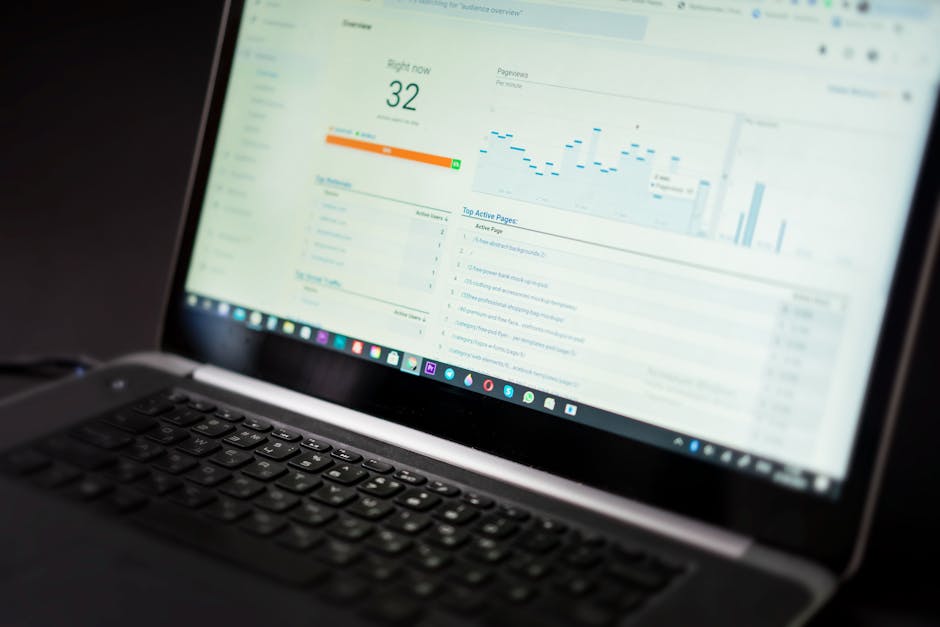
A disciplined post-launch monitoring framework, as deployed by SkyView Labs, consists of three layers:
- Real-Time Operations Monitoring: Automated alerts for uptime, latency, errors, and critical workflow failures.
- Quality and Drift Monitoring: Dashboards for output review (accuracy, hallucinations, drift) and structured human-in-the-loop sampling.
- Business, Security, and Cost Monitoring: Regular reporting on KPIs, usage patterns, cost trends, and compliance or incident reviews.
First 90 Days: Timelines and Milestones
The first three months after go-live are decisive. At SkyView Labs, we structure managed operations to focus on:
- Days 1–30: Validate technical baselines, ensure log completeness, check onboarding, review overrides and first failures.
- Days 31–60: Assess drift in behavior and cost, compare usage to baseline expectations, monitor new security exposures.
- Days 61–90: Formal assessment of integrity, quality, and business value; decide on prompt/model retraining, workflow tuning, or escalation procedures.
Common Monitoring Mistakes
- Focusing Only on Uptime: Availability without quality or safety is not production reliability.
- Ignoring Integration Health: Failures often occur in connectors and data flows, not just the model itself.
- Neglecting Cost Trends: Growing request or token volume can undermine ROI if left unchecked.
- Tracking Effort, Not Outcomes: True measurement means correlating AI activity to business metrics, not just technical logs.
Post-Launch Monitoring: SkyView Labs’ Approach
We embed these monitoring pillars into every engagement—from legacy modernization and system integration, to custom AI platforms and managed operations. Our managed AI operations practice assigns the same team that built your system to monitor, optimize, and operate it over time. This ensures direct accountability, rapid response, and alignment between build decisions and operational realities. For further reading on choosing the right operational model, visit Who Runs the AI System After Launch?
Best Practices for Reliable AI Monitoring
- Design for observability up front, not as a bolt-on.
- Unify monitoring across application, integration, data, and inference layers.
- Utilize human-in-the-loop review for new or complex workflows.
- Make security and compliance a monitoring requirement—not an afterthought.
- Translate technical signals to business KPIs managers understand.
- Continuously tune thresholds and alerts as real-world usage reveals new needs.
Monitoring is not a “set and forget” activity. The production environment is dynamic—users, integrations, and data are always changing. The organizations that treat AI monitoring as a living, owned process are those who see lasting business impact.
FAQ: Post-Launch AI Monitoring
What are the most critical metrics to monitor day one after an AI system launches?
Focus on uptime, latency, error rates, log completeness, and task/workflow completion. These indicate whether the system is accessible, responsive, and functionally integrated in real workflows from the outset.
How does monitoring differ between traditional ML and generative/agentic AI?
Traditional ML relies on static input distributions and can be monitored with accuracy, precision, and recall. Generative and agentic AI (such as LLM-based and RAG systems) require monitoring for hallucinations, grounding, prompt injection, and retrieval/context quality, along with output format adherence and downstream task success.
What tools or dashboards does SkyView Labs use for monitoring?
Monitoring is tailored per engagement, leveraging real-time infrastructure and application dashboards, custom output samplers, and end-to-end audit logging. These are built into managed AI operations for live alerting, drift detection, and compliance reporting. Every deployment is structured to produce documentation and metrics that stand up to procurement and regulatory review.
How should organizations tune their monitoring as usage evolves?
Begin with conservative alerting, sample reviews, and regular governance check-ins. As the system matures, tune thresholds based on live data, shifting business needs, and new failure or abuse patterns revealed over time.
How often should business impact be reviewed after go-live?
Early-phase reviews (monthly in the first 3–6 months) are best for catching unforeseen issues. Mature systems move to quarterly reviews, always tied directly to operational outcomes and process KPIs.
Conclusion
Monitoring is the heartbeat of post-launch AI success. It is how organizations keep systems safe, useful, and economically justified in the face of real-world complexity. The SkyView Labs team brings a depth of operational expertise—modernization first, continuous integration next, embedded monitoring always. If you want to move from pilots to real production AI with measurable outcomes, consider an expert partnership built on continuous operational rigor rather than one-off launches. Book a discovery call or explore more on our website.